
Too many organisations scramble when a leadership vacancy hits. The root cause is simple: succession planning often exists only on paper. The missing link? Training that actually prepares employees for the roles they’re expected to fill.
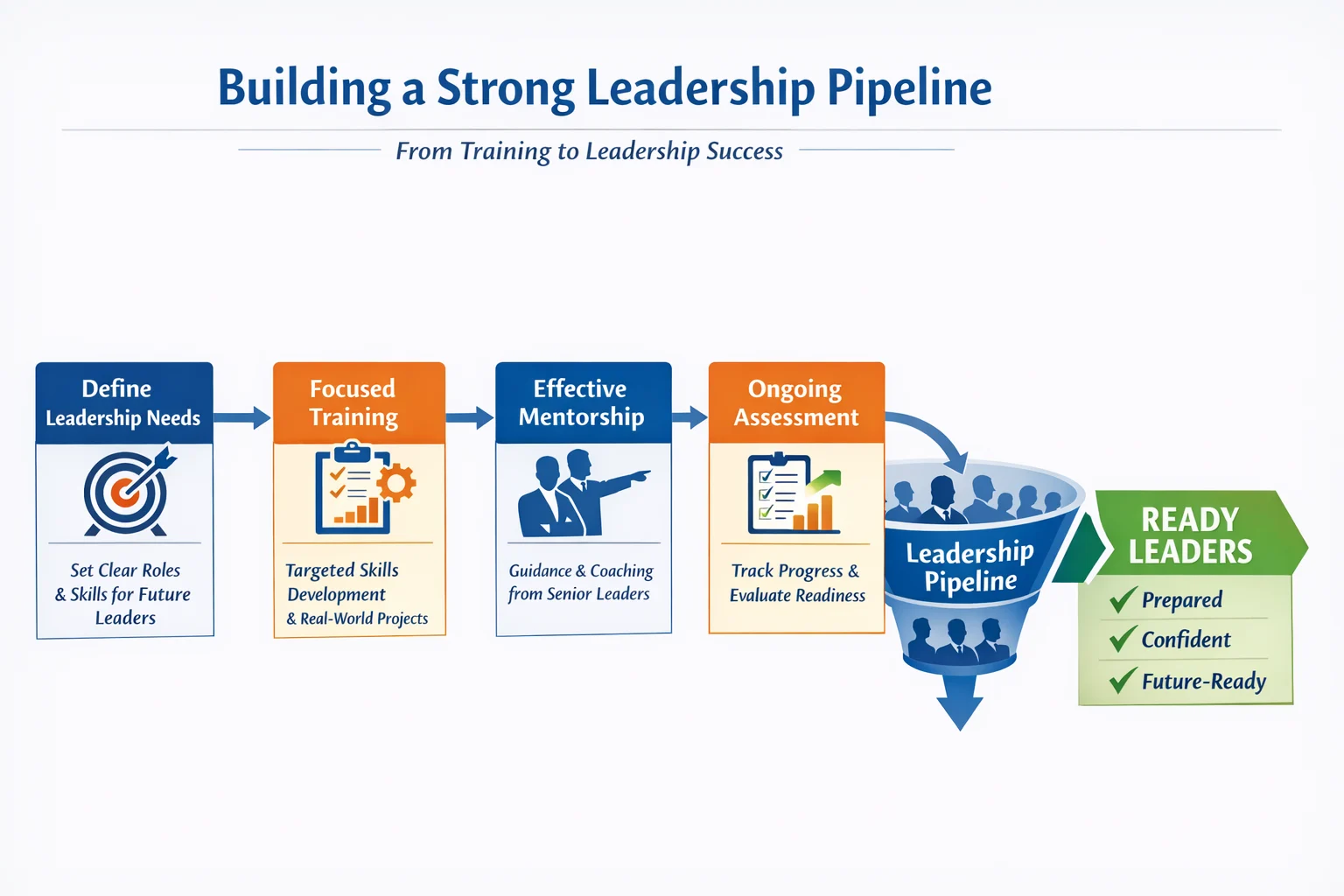
Start with clarity. Leadership isn’t generic. Define what success looks like at every level: manager, director, executive. Identify the skills, behaviours, and results needed. Without this, training becomes a guessing game, and potential leaders remain underprepared.
Next, make training purposeful. Don not rely on generic workshops. Tailor programs to bridge current capabilities with future role requirements. A middle manager ready for a director role may need strategic thinking, advanced communication, and financial insight. Include real-world projects, simulations, and leadership exercises to make learning practical.
Mentorship accelerates growth. Pair high-potential employees with seasoned leaders. Mentors provide guidance, challenge assumptions, and model decision-making under pressure. Training alone cannot replicate this hands-on insight.
Track progress continuously. Use performance reviews, skills assessments, and leadership simulations to monitor readiness. A healthy pipeline is measurable, not theoretical. This ensures successors are genuinely prepared when opportunities arise.
Finally, embed succession planning into the culture. Leadership development should be continuous, not a last-minute fix. Employees see a clear path forward, engagement rises, and retention improves. Linking training to leadership pipelines turns succession planning into a proactive strategy, not a reactive scramble.
The takeaway is simple: define leadership, train with purpose, mentor consistently, measure progress, and make it part of your culture. When you do this, succession planning stops being a headache and becomes a growth engine. Your organisation doesn’t just survive leadership changes, it thrives.